
What Is Bipolar Disorder? Symptoms, Causes, Myths & Treatment
Have you ever experienced a day when you felt very happy and energetic, followed by a day when you felt tired or sad? Changes in mood are a normal part of life. However, for someone living with bipolar disorder, changes in mood, energy, and activity levels can be much more intense and may affect everyday life.
Bipolar disorder is a mental health condition that can affect a person’s relationships, work, studies, and overall well-being. Understanding this condition can help reduce misunderstandings and encourage people to seek the right support.
What Is Bipolar Disorder?
Bipolar disorder is a mental health condition that causes episodes of significant changes in mood, energy, and activity levels.
A person may experience periods of unusually high energy or mood, known as mania or hypomania, and periods of depression. These episodes are different from the everyday mood changes that everyone experiences.
Bipolar disorder affects people differently. With proper treatment and support, many people can manage their symptoms and lead meaningful lives.
Common Signs and Symptoms of Bipolar Disorder
The symptoms of bipolar disorder usually occur in episodes. These episodes may last for days or weeks, depending on the person and the type of episode.
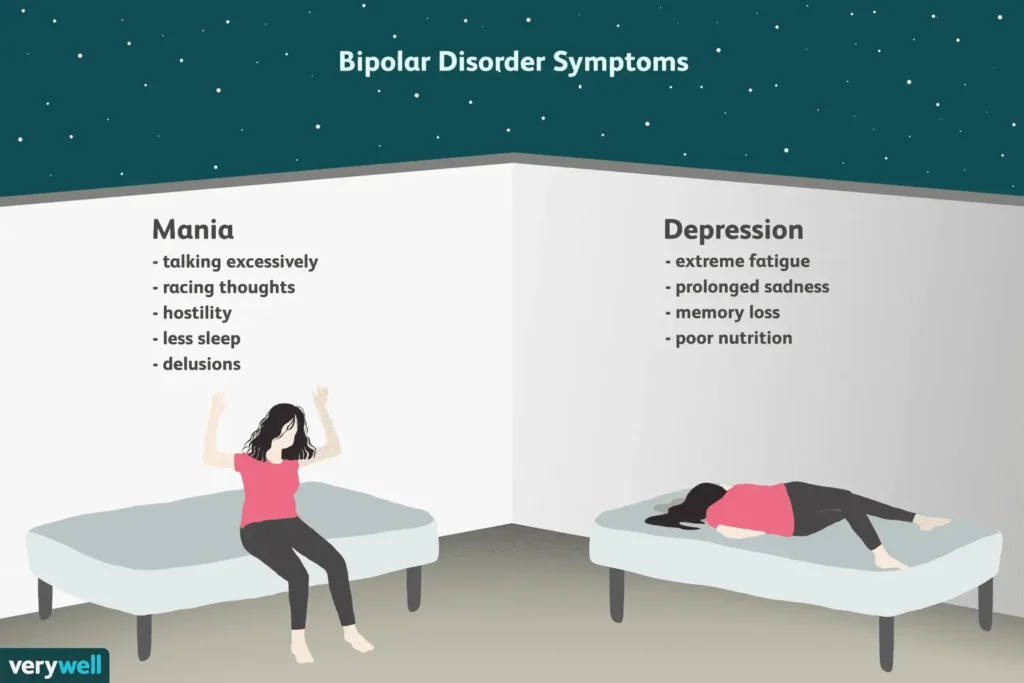
1. Signs of Mania or Hypomania
During these periods, a person may:
- Feel unusually energetic or excited
- Sleep much less than usual without feeling tired
- Talk more quickly than normal
- Have racing thoughts
- Feel unusually confident or powerful
- Become easily distracted
- Make impulsive decisions, such as spending too much money
Mania can seriously affect daily life and may sometimes require urgent medical care. Hypomania involves similar symptoms but is less severe.
2. Signs of Depression
During a depressive episode, a person may:
- Feel sad, empty, or hopeless
- Lose interest in activities they once enjoyed
- Feel tired or lack energy
- Experience changes in sleep or appetite
- Find it difficult to concentrate
- Feel worthless or guilty
These symptoms can make everyday tasks feel difficult. Some people may also experience thoughts of self-harm and need immediate support.
What Causes Bipolar Disorder?
There is no single cause of bipolar disorder. Research suggests that several factors may contribute to its development, including:
- Genetics: Having a close family member with bipolar disorder may increase the risk.
- Brain functioning: Differences in brain processes involved in mood regulation may play a role.
- Stressful experiences: Major life changes and stressful events can sometimes trigger mood episodes in people who are vulnerable.
Bipolar disorder is not a personal weakness, and it is not something a person chooses to experience.
Common Myths About Bipolar Disorder
There are many misunderstandings about bipolar disorder. Let’s look at two common myths.
Myth 1: Bipolar disorder means having frequent mood swings.
Fact: Bipolar disorder involves distinct episodes of mania, hypomania, or depression. Ordinary mood changes alone do not mean someone has the condition.
Myth 2: People with bipolar disorder cannot live normal lives.
Fact: With appropriate treatment, support, and healthy routines, many people with bipolar disorder can manage their symptoms, maintain relationships, and work toward their goals.
Understanding the facts can help reduce stigma and make it easier for people to ask for help.
Can Bipolar Disorder Be Treated?
Yes. Bipolar disorder can be managed with appropriate professional treatment.
Treatment may include:
- Medication: A psychiatrist may prescribe medication to help stabilise mood and prevent future episodes.
- Psychotherapy: Therapy can help people understand their experiences, manage stress, and develop healthy coping strategies.
- Healthy routines: Regular sleep, physical activity, and consistent daily habits can support overall well-being.
- Family support: Understanding and encouragement from loved ones can make a meaningful difference.
Treatment should be personalised. People should not stop or change prescribed medication without consulting their treating doctor.
When Should You Seek Professional Help?
Consider seeking professional help if significant changes in mood, energy, sleep, or behaviour begin affecting your daily life, relationships, work, or studies.
A psychiatrist can assess symptoms, make a diagnosis, and recommend appropriate medical treatment. A qualified mental health professional can also provide psychological support as part of a wider care plan.
If someone experiences severe symptoms, loses touch with reality, or has thoughts of suicide, seek urgent professional help.
Final Thoughts
Bipolar disorder is more than simply feeling happy one day and sad the next. It is a mental health condition that can affect mood, energy, sleep, and daily functioning.
The important thing to remember is that bipolar disorder is treatable, and people living with it deserve understanding, respect, and support.
Learning about the condition is an important first step toward breaking myths and encouraging early help-seeking.
If you or someone you care about is experiencing concerning mood changes, reaching out to a qualified mental health professional can help you understand what is happening and explore the right support.
About the Author
Dr. Rati Chandra is an Emotional Well-Being Coach, Professor, and Speaker based in Bangalore. With experience spanning corporate leadership and academia, she is passionate about helping people understand their emotions, manage stress, and improve their emotional well-being.
Through her educational content, Dr. Rati Chandra aims to make mental health information easier to understand and encourage people to seek appropriate support without fear or judgment.
This article is for educational purposes only. It does not replace a professional assessment, diagnosis, or medical treatment.